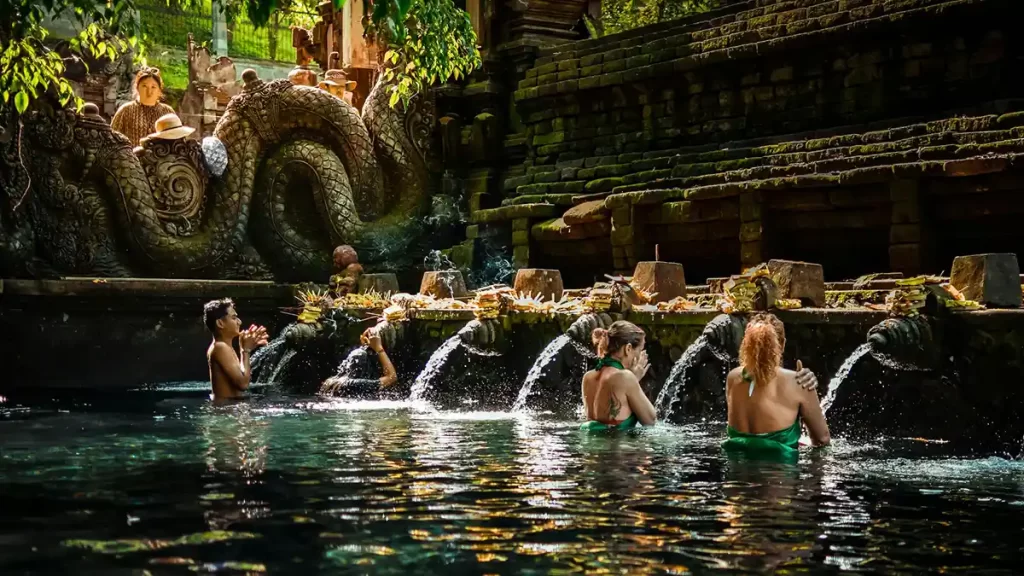
Tirta Empul Temple in Tampaksiring is one of Bali’s most important Hindu water temples. It is best known for its natural holy spring, where Balinese Hindus perform a traditional purification ceremony called melukat.
If you are visiting Ubud and want to experience Balinese spiritual traditions, Tirta Empul offers an opportunity to learn about local religious customs. You can explore the temple courtyards, observe traditional prayers or participate in the holy water purification ritual.
Before visiting, it is helpful to understand how melukat works, what clothing you need, where to arrange a sarong and how to behave inside the temple. This guide covers the practical details for a comfortable and respectful visit.
Tirta Empul Temple: Quick Visitor Guide
| Location | Manukaya Village, Tampaksiring, Gianyar, Bali |
| From Ubud | Approximately 30–45 minutes by car |
| Main attraction | Natural holy spring and melukat ritual |
| Recommended time | 1.5–2.5 hours |
| Dress code | Modest clothing, sarong and sash |
| Facilities | Clothing arrangements, changing facilities and storage options |
| Transport | Private car or local driver |
Travel times are estimates and depend on traffic and your pickup location. Check current entrance fees and facility arrangements before visiting.
What Makes Tirta Empul Temple Special?
Tirta Empul is a sacred Hindu temple built around a natural spring. Its name is associated with holy water, which plays an important role in Balinese Hindu religious traditions.
The temple is particularly famous for its bathing pools. Water flows from a series of stone fountains into the pools, where worshippers perform purification practices and prayers.
For Balinese Hindus, the spring is spiritually significant. The water is used in religious ceremonies and is traditionally associated with purification, spiritual balance and blessings.
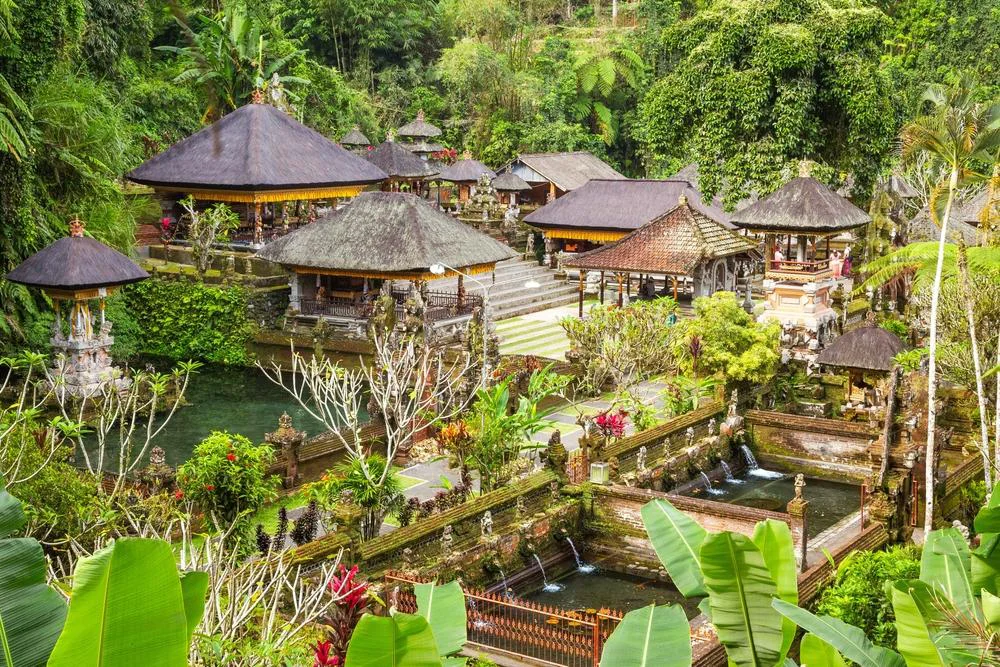
The Three Main Temple Areas in Tirta Empul Temple
The temple complex has three main sections, each with a different purpose.
1. Jaba Pura: Outer Courtyard
This is the entrance area where visitors begin their temple visit. You can prepare your temple clothing, arrange your belongings and get ready to explore the complex.
2. Jaba Tengah: Purification Pools
This central courtyard contains the famous bathing pools. Visitors can observe worshippers performing melukat and participate in the ritual when permitted by temple rules.
3. Jeroan: Inner Courtyard
The inner courtyard is the most sacred section of the temple. It contains shrines and prayer areas used for Hindu worship. Visitors should follow access restrictions and avoid disturbing religious activities.
Understanding the Melukat Purification Ritual
Melukat is a traditional Balinese Hindu purification ceremony involving sacred water. It is associated with cleansing the body and mind, seeking spiritual balance and preparing for prayer.
Although international visitors may participate when permitted, melukat is more than an ordinary bathing experience. It has religious meaning and involves traditional customs that should be respected.
Some visitors choose to participate as part of their cultural experience in Bali, while others prefer to observe the ceremony from outside the bathing area.
How to Perform the Holy Water Ritual at Tirta Empul Temple
If this is your first time experiencing melukat, the following steps will help you understand the general process. Always follow the instructions of temple staff or a knowledgeable local guide.
Step 1: Prepare Your Temple Clothing
Wear the appropriate temple sarong and sash. If you plan to enter the water, ask for a bathing sarong rather than assuming that your regular temple clothing is suitable.
Step 2: Prepare an Offering and Pray
Offerings called canang sari are part of Balinese Hindu religious practices. Participants may make an offering and pray before entering the purification pool.
If you are unfamiliar with the ceremony, ask for guidance. Visitors can also take a quiet moment for personal reflection.
Step 3: Enter the Purification Pool
Enter the designated bathing area carefully. The water is naturally cool, and the pool can become busy during weekends and religious celebrations.
Step 4: Follow the Permitted Water Fountains
Participants generally move through the permitted fountains in sequence. At each fountain, they pause for prayer or reflection and allow the sacred water to flow over their head and body.
Do not automatically use every fountain. Some are reserved for specific religious ceremonies and should not be used by general visitors.
Step 5: Finish the Ritual and Change Clothes
After completing the permitted fountains, leave the pool carefully and return to the changing area. Dry yourself, change into clean clothes and take a few moments to rest.
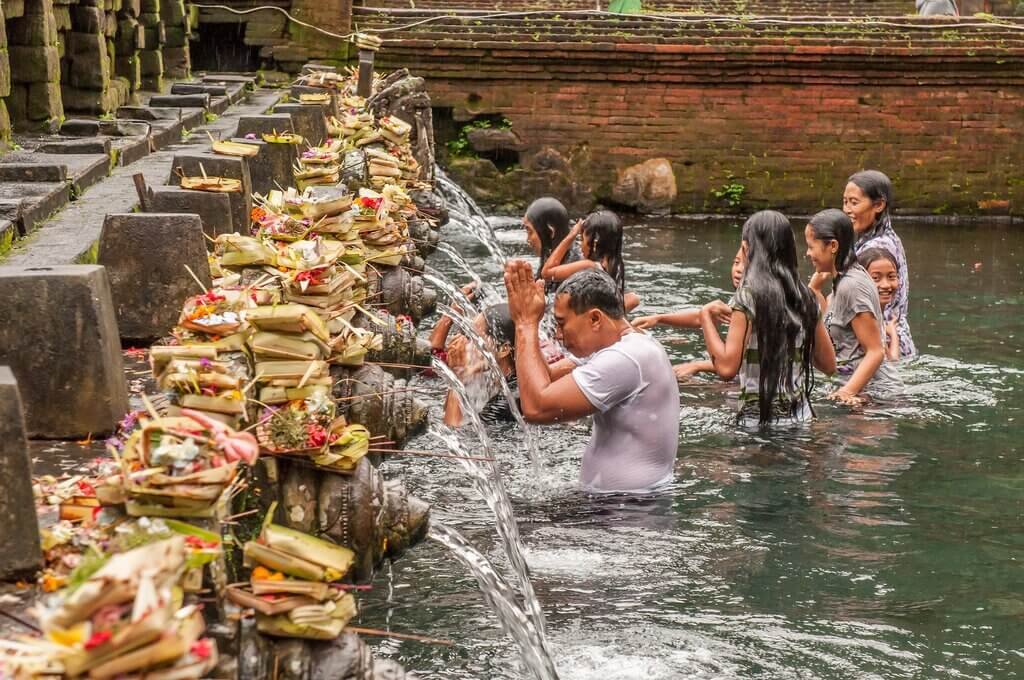
Sarong Rental, Changing Rooms and Lockers
One of the most common questions from first-time visitors is whether they need to bring their own sarong and where they can change after the ritual.
Sarong Rental
Temple clothing arrangements are available for visitors who do not bring their own sarong. Ask at the entrance or designated clothing area about the current rental or borrowing arrangements.
If you plan to participate in melukat, specifically ask about the bathing sarong. Your clothes will become wet during the ritual.
Changing Facilities
Changing facilities are available around the bathing area. Bring a towel and a complete set of dry clothes so you can change after finishing the ritual.
Lockers and Personal Belongings
Storage arrangements may be available near the bathing facilities. Ask staff about locker availability and any applicable charges.
Keep important valuables, your passport and electronic devices in a secure place. Avoid leaving personal belongings unattended while you are in the water.
What to Bring to Tirta Empul
- One complete set of clean clothes.
- A towel and small toiletries.
- A waterproof bag for wet clothing.
- Small cash for local purchases and possible facility charges.
- Minimal personal valuables.
- Comfortable footwear that is easy to remove.
Temple Etiquette: Important Rules for Visitors
Tirta Empul is an active place of worship. Visitors should remember that local people come here for religious ceremonies and personal prayers.
Dress Modestly
Wear appropriate clothing and follow the temple dress code. A sarong and sash are required in designated areas. Avoid revealing clothing.
Respect People Who Are Praying
Keep your voice low and avoid walking in front of people performing religious ceremonies. Give worshippers enough space to complete their prayers.
Do Not Use Soap or Shampoo
The sacred bathing pools are not swimming pools. Do not use soap, shampoo or other personal cleaning products in the water.
Check Before Taking Photographs
Photography is possible in appropriate visitor areas, but always respect people who are praying. Avoid flash photography or disturbing religious activities.
Follow Sacred Area Restrictions
Some temple areas have specific religious access restrictions. Local customs also include restrictions for people who are menstruating from entering sacred temple areas and participating in certain religious activities. Check the current temple rules before your visit.
How to Get to Tirta Empul Temple from Ubud
Tirta Empul is located in Tampaksiring, northeast of central Ubud. The journey usually takes around 30–45 minutes by car, depending on traffic and your hotel location.
Private Car with a Local Driver
Booking a Private Car Driver in Ubud is a practical option if you prefer a flexible sightseeing schedule. You can arrange hotel pickup, travel directly to the temple and have the driver wait while you explore.
This is especially convenient if you want to visit other attractions in the Tampaksiring area on the same day.
Nagiku Bali is a locally operated Ubud tour driver service that can help arrange comfortable private car transport to Tirta Empul. You can discuss your pickup location, departure time and additional sightseeing stops before confirming your trip.
Taxi or Ride-Hailing Service
You can also arrange a taxi or ride-hailing service from Ubud. However, return transportation from the temple may require additional planning. Confirm how you will return before starting your visit.
Other Places to Visit Near Tirta Empul Temple
If you have additional time, you can combine Tirta Empul with other attractions in the surrounding area.
Gunung Kawi Temple
Gunung Kawi is an archaeological temple complex famous for its large ancient stone shrines carved into rock. It is a good option for travellers interested in Balinese history and architecture.
Tegallalang Rice Terraces
Tegallalang is known for its green rice terraces and traditional agricultural landscapes. Visitors can enjoy the scenery, take photographs or stop for refreshments.
Kintamani
Kintamani offers views of Mount Batur and Lake Batur. It can be included in a longer sightseeing journey if you want to combine cultural attractions with Bali’s volcanic scenery.
Plan your stops according to your available time. It is better to enjoy Tirta Empul without rushing than to squeeze too many attractions into one day.
Practical Tips for a Better Visit
- Arrive in the morning: Earlier visits can be more comfortable before visitor numbers increase.
- Allow enough time: Set aside 1.5–2.5 hours if you plan to participate in melukat.
- Bring extra clothes: Your bathing clothes will become wet.
- Carry small cash: Useful for local purchases and possible additional charges.
- Ask questions: Follow staff instructions if you are unfamiliar with the ritual.
- Check religious dates: Ceremonies can affect visitor activity and access.
- Arrange transport: Plan your return journey before leaving Ubud.
Is Tirta Empul Temple Worth Visiting?
Yes. Tirta Empul is worth visiting if you are interested in Balinese culture, Hindu traditions and sacred water rituals.
Even if you decide not to participate in melukat, you can explore the permitted temple areas, appreciate the traditional architecture and observe local religious practices respectfully.
For travellers interested in the holy water blessing ritual in Bali, understanding the customs before arriving can make the experience more comfortable and meaningful.
With suitable clothing, enough preparation and reliable transportation, Tirta Empul can become one of the most memorable cultural stops during your stay in Ubud.
Ready to Explore Tirta Empul Temple & Tampaksiring?
Make your trip seamless and stress-free with a friendly local driver who knows the best routes and cultural insights. Let Nagiku Bali help you customize your ideal day trip around Ubud.
Plan Your Trip with Nagiku BaliFrequently Asked Questions
1. Can foreigners participate in the melukat ritual at Tirta Empul?
Yes. International visitors may participate when permitted by temple rules. Wear appropriate clothing, follow the designated fountain sequence and respect local religious traditions.
2. Do I need to bring my own sarong?
No. Sarong rental or borrowing arrangements are available at the temple. Ask about the appropriate bathing sarong if you plan to enter the purification pools.
3. How long does the melukat ritual take?
The time depends on visitor queues, preparation and the permitted fountains. Allow approximately 1.5–2.5 hours for the complete temple visit.
4. Can I visit Tirta Empul without participating in melukat?
Yes. You can explore permitted temple areas, appreciate the architecture and observe the sacred spring without entering the bathing pools.
5. What is the best way to get to Tirta Empul from Ubud?
A private car with a local driver is a convenient choice, especially if you want to combine the temple with other attractions. Arrange your pickup and return journey in advance.